A Mortgage Calculator That Actually Answers the Right Question
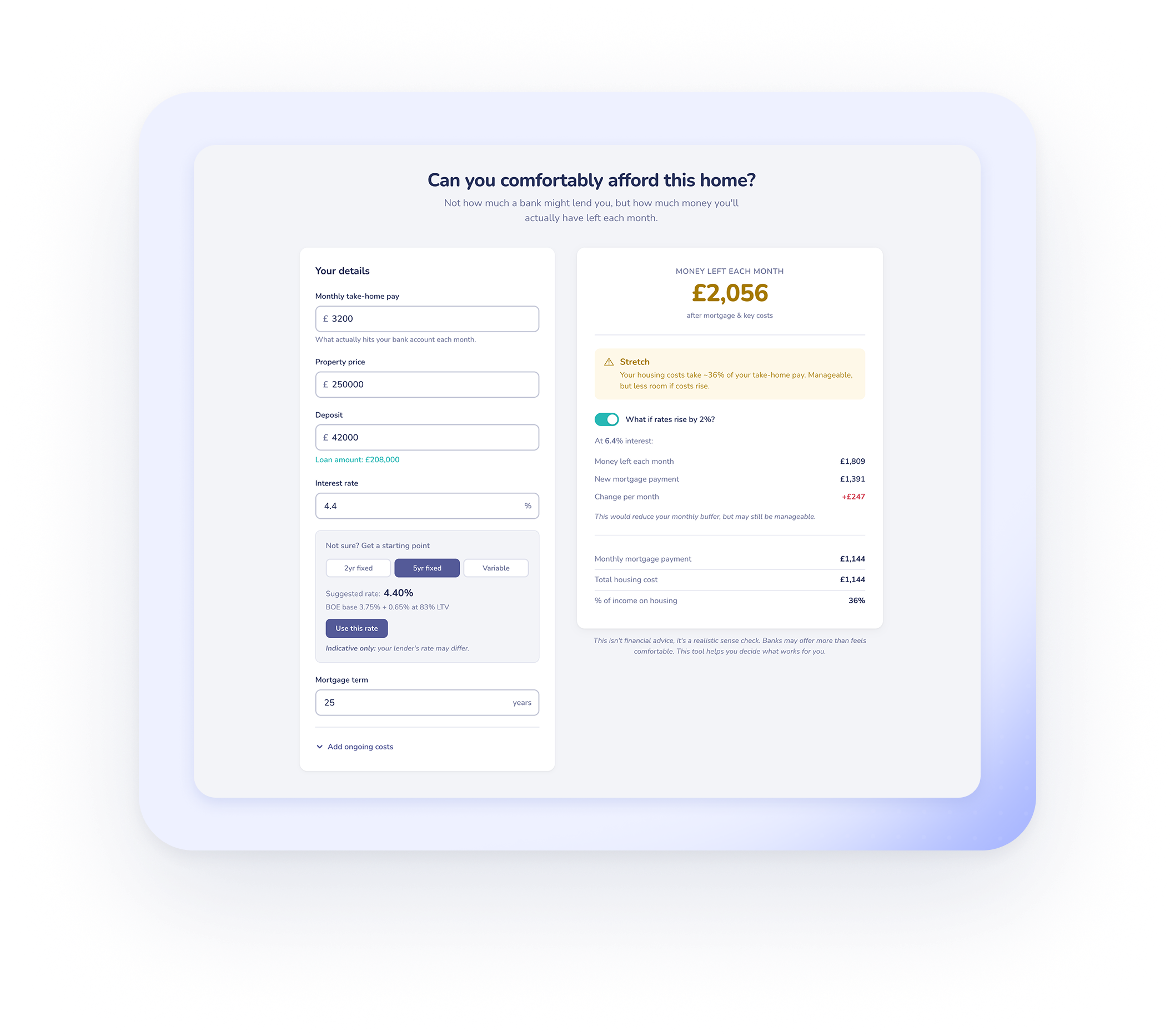
This month I finished a white label project for a client in the financial space, and it's one of those builds I've genuinely enjoyed; partly because the idea behind it is so sensible it makes you wonder why it isn't more common. And partly because I'm in the process of buying a house, and this sort of thing is genuinely helpful.
The tool is called Breathing Room, and it's a mortgage affordability calculator. But not the usual kind.
The Problem With Most Mortgage Calculators
Most calculators answer the question: how much will a bank lend you? You plug in your salary, and out comes a number. Typically this is somewhere between 4 and 4.5x your income. Congratulations, that's your budget. Now, good luck affording food!
The trouble is, that number is based on what lenders are comfortable with, not what you're comfortable with. Banks are incentivised to lend as much as possible. Your financial wellbeing isn't really their primary concern.
Breathing Room flips the question. Instead of asking "what will the bank approve?", it asks: after you've paid your mortgage and key costs each month, how much money do you actually have left?
It sounds obvious, but it makes a real difference to how people think about what they can afford.
What the Calculator Does
Users enter their take-home pay, property price, deposit, interest rate, and mortgage term. The tool then calculates their monthly payment, shows what percentage of their income goes on housing, and most importantly, suggests how much they'll have left over each month.
There's also a built-in rate guide that suggests indicative rates based on BOE base rate and LTV, and a toggle to stress-test what happens if rates rise by 2%. So in theory, you won't have any nasty surprises six months into home ownership.
The affordability verdict is framed in plain language: comfortable, stretch, or tight, so users can get an honest gut-check before they get too far down the line with a property.
Why This Kind of Tool Works So Well on a WordPress Landing Page
For my client, the goal was always conversion. They want to turn more website visitors into leads. An interactive calculator does this beautifully for a few reasons:
- First, it gives people a reason to stay. Rather than skimming a page of text and bouncing, users spend time with the tool, inputting their real numbers. That time on the page signals genuine intent to analytics platforms.
- Second, it builds trust. A calculator that honestly tells someone their budget might be a stretch, rather than flattering them with a big borrowing number, positions the brand as a straight-talking partner.
- And third, it creates a natural next step. Once someone has run their numbers and seen they're in a comfortable position, the barrier to reaching out for advice drops significantly. The calculator does the qualification work; the conversion almost takes care of itself.
A Nice One to Ship
Not every project is exciting to write about, but this one felt worth sharing. It's a clean concept, it solves a real problem, and it's the kind of tool that could genuinely help someone avoid overextending themselves on the biggest purchase of their life.